Grid Surveys or Focal Watches: Two Practical Ways to Know a Garden
When you want to learn a garden, there are many quiet rhythms to follow. Two especially useful, low-friction approaches are the grid survey — a spatially systematic check across a patch — and the focal watch — a concentrated observation of a single plant or spot over repeated visits. They produce different kinds of knowledge. Below are practical steps for each, followed by guidance on choosing the best fit for your curiosity, schedule, and the questions you want to answer.
Method A: The Grid Survey — See the Garden as a Map
The grid survey treats your site like a simple map. Divide the area into regular plots and make a quick checklist for each. Over time you build a mosaic of how the whole space changes.
Why use it
- Spatial patterns: Reveals where pests, blooms, moisture, or volunteers cluster.
- Efficiency: A short walk covers the whole area and is easy to repeat.
- Comparison: Makes it simple to compare corners, beds, or containers.
How to run a basic grid survey
- Sketch a simple map: on a page draw a rectangle and divide it into 6–12 squares or zones. Labels are enough — no scale required.
- Choose 4–6 observation items: flowering, leaf color, pests, soil moisture (dry/ok/wet), and volunteers are good starters.
- Walk each zone in one pass, jotting a short code for each item (F for blooming, P for pests, M for moist, etc.). Aim for 10–20 seconds per zone.
- Date each survey and keep the page in a notebook or a folder. Repeat weekly or after storms.
- After 4–6 visits glance across dates and spots to see recurring patterns.
Quick tools
- Small grid sketch in a garden notebook
- Mechanical pencil and eraser
- Optional: a camera for a single photo per zone
Method B: The Focal Watch — Attend to One Plant
The focal watch narrows attention. Choose one plant, stump, or pot and observe it closely each visit. Small repeated observations reveal phenology, growth rates, and subtle interactions.
Why use it
- Depth: Notice details that escape quick walks — bud sequence, insect visitors, micro-damage.
- Continuity: Tracks individual life history across the season.
- Practice: Builds skills in careful seeing and description.
How to run a focal watch
- Pick your subject: a shrub, perennial, pot, or even a section of turf about the size of an open palm.
- Record a short baseline: height, number of stems, notable features. Take a reference photo from a fixed position if you like.
- Each visit (daily, every few days, weekly), note three focused items: leaves/buds, flowers/fruits, and visitors or damage. Keep entries to a few sentences or a short checklist.
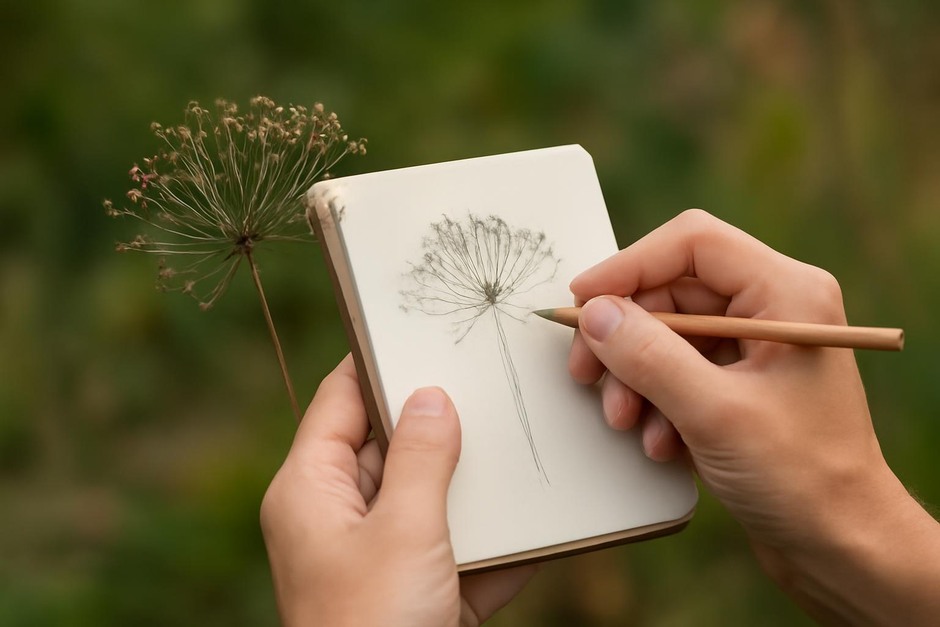
- Every 2–4 weeks add a slightly longer note: measure height, count buds or seedheads, or sketch a leaf.
- After a season review the sequence — you’ll see patterns you never noticed in a single visit.
Quick tools
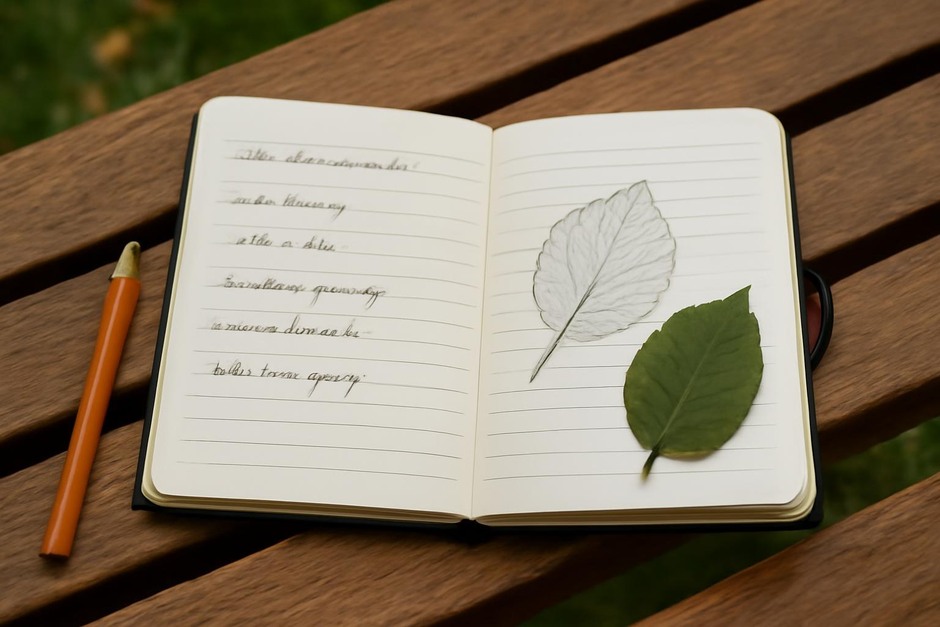
- Field notebook with one dedicated page per subject
- Pencil, small ruler, and a camera or phone for fixed-view photos
- Optional: hand lens (10x) for insect or fine-structure observation
Comparing the Two Approaches
Both methods are quiet, humble ways to know a garden, but they emphasize different scales and skills.
- Scale: Grid surveys prioritize breadth; focal watches prioritize depth.
- Time: Grid surveys are fast to perform across a site; focal watches require repeated attention to one subject, which can be quick but frequent.
- What you learn: Surveying shows spatial trends; watches show sequence and cause-and-effect at the individual level.
- Records: Grids produce comparative data across space; focal pages become narrative timelines.
How to Choose — A Practical Guide
Choose based on your question, schedule, and temperament.
If you want to know where things are happening
Pick a grid survey. Use it when you want to locate a recurring pest hot-spot, find where blooms are concentrated, or track moisture differences across beds. It’s efficient if you have limited time but care about the whole patch.
If you want to understand why something changes
Pick a focal watch. Use it to learn the life history of a plant, to see how pollinators use a flower, or to follow a problem from first symptom to resolution. It suits a curiosity for process more than pattern.
If you’re not sure
Combine them. Start with a quick grid to spot interesting zones, then pick one or two focal subjects from those zones to watch more closely. Alternate: a weekly grid, daily short watches for a chosen plant during bloom, then return to the grid.
Small, repeated observation is the point, whatever method you choose. Both approaches train the same habit: a patient look, a short note, and the gentle accumulation of detail. Over a season those tiny records add up into a map and a story of the garden you didn’t have before.