Turning Pile or Worm Bin: Two Everyday Compost Routines
Composting is one of those small, seasonal practices that rewards regular attention. In autumn you collect fallen leaves; in spring you trim perennials; year-round you have kitchen scraps. Two everyday approaches work well for most households: a turning pile you tend outside, and a worm bin you manage in a small space. Both reduce waste and produce rich material for the garden, but they ask for different amounts of time, space, and hands-on care.
The turning pile: simple layers and occasional turning
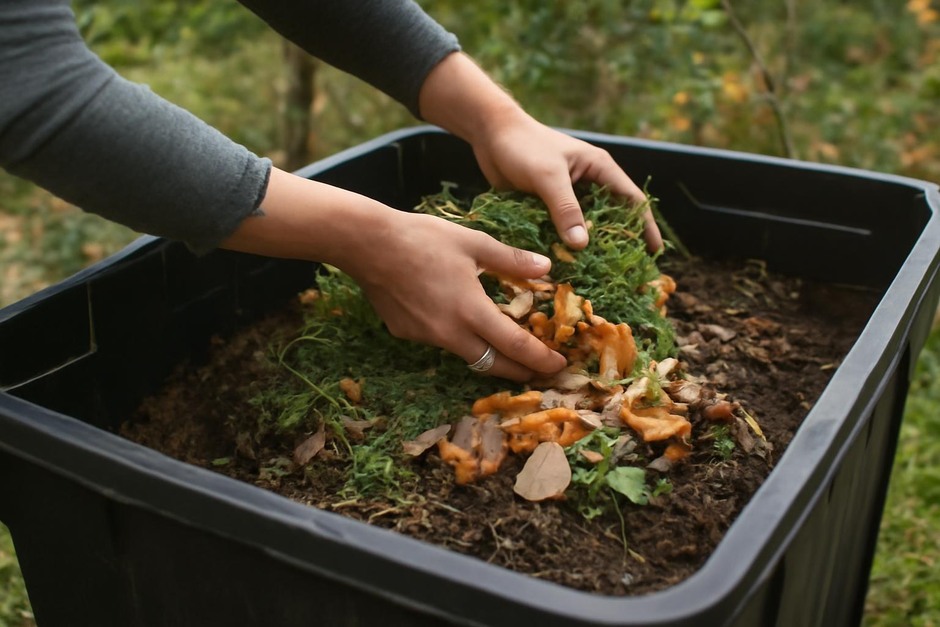
The turning pile is the classic backyard method. It can be as low-tech as a three-sided pallet enclosure or a purchased tumbler. The idea is to create a mound of mixed green (kitchen scraps, fresh clippings) and brown (leaves, straw, shredded paper) materials and periodically turn it to introduce air and even out moisture.
How to set it up and maintain it
- Choose a spot with good drainage and partial sun. A shaded corner near the garden is fine.
- Start with a coarse base layer (sticks or straw) for airflow, then alternate brown and green layers about 4–6 inches thick.
- Keep the pile moist like a wrung-out sponge. Add water during dry spells and cover with a tarp in heavy rain if it gets soggy.
- Turn the pile every 1–4 weeks. Turning mixes materials, distributes moisture, and helps heat the pile for faster breakdown.
- When the material is dark and crumbly and smells earthy, it’s ready to use—usually several months to a year depending on size, heat, and frequency of turning.
Pros and cons at a glance
- Pros: Handles large volumes (yard waste), little daily attention, low cost, works outdoors year-round.
- Cons: Needs outdoor space, occasional heavy turning, slower if not managed, can attract pests if left unmanaged.
The worm bin: compact, continuous vermicompost
A worm bin, or vermicompost system, uses composting worms (typically Eisenia fetida) to process kitchen scraps into a rich, fine compost called castings. Worm bins are compact and suitable for patios, balconies, or a cool corner in a garage.
How to set it up and maintain it
- Use a plastic or wooden bin with drainage and airflow. Start with a bedding of shredded paper, cardboard, and a handful of finished compost or soil.
- Add a modest population of red wiggler worms and feed small, chopped kitchen scraps—no large bones, citrus in excess, or oily foods.
- Feed on a schedule (twice a week or once a week), burying scraps in different spots to keep the bin balanced.
- Keep the bedding moist but not wet and maintain a cool, stable temperature away from freezing or intense heat.
- Harvest castings by moving finished material to one side and adding fresh bedding and food; worms will migrate and leave the ready compost to collect.
Pros and cons at a glance
- Pros: Compact, minimally smelly when managed, continuous small-batch output, excellent for potting mixes and seedlings.
- Cons: Not ideal for large woody yard waste, requires regular small feedings and occasional maintenance, sensitive to temperature extremes and certain foods.
How to choose between them
Choosing comes down to three practical questions: How much material do you produce? How much time and physical effort do you want to commit? Where will the system live?
- If you have a yard with lots of leaves and prunings: The turning pile is likely the better fit. It handles volume, integrates easily with leaf-collecting seasons, and scales up without much daily attention.
- If you live in an apartment or want compost close to your potting bench: A worm bin offers a compact, elegant solution. It’s well suited to regular kitchen scraps and produces a very refined amendment for houseplants and containers.
- If you prefer low-effort seasonal work: The turning pile lets you make larger batches that you can leave to mature between active seasons.
- If you enjoy a small daily ritual: The worm bin rewards regular, gentle tending and can become a mindful kitchen practice—feeding, checking moisture, harvesting.
- If you want a mix: Consider both. Use the turning pile for leaves and woody material and send your kitchen scraps to a worm bin. Finished vermicompost can be mixed into the outdoor pile or used directly at the potting bench.
Whichever you try, treat composting as a small seasonal experiment. Start with a manageable size, keep basic logs of what you add and how often you turn or feed, and adjust based on smell, moisture, and how quickly material breaks down. Over a season you’ll find a rhythm that fits your space and attention—and a steady supply of nourishing material for the garden.
Small practices, repeated quietly, make composting less about perfection and more about noticing: the smell of a healthy pile, the texture of finished castings, the slow folding of a season’s leaves into something that returns to the soil.