Noticing the Late-Summer Garden: A Four-Part Guide to Texture, Light, and Seedheads
Problem
By late summer many gardens lose the high drama of peak bloom and settle into quieter, subtler states: seedheads, fraying petals, sun-bleached leaves, and a different quality of light. Those qualities are easy to overlook. We rush past on our way to tasks, or we expect—and look only for—spectacle. The result is a season that feels like a letdown, when in fact it offers rich material for attention if we change how we look.
Principles
Four simple principles help you notice the late-summer garden without turning observation into a checklisted chore. These keep the practice small, repeatable, and generous.
- Slow first, decide later. Walk at half your usual pace for the first minute or two. Let the eye catch shapes and contrasts before naming them.
- Look for structure over color. When color fades, structure becomes more visible: seedheads, stems, the geometry of leaves and shadows.
- Pay attention to light and angle. Late-summer light is warmer and lower; shifting your viewpoint by a few feet or bending low often reveals textures the same light was hiding.
- Use one sense beyond sight. Sound, touch (when appropriate), and even scent offer clues that deepen what you see—crackling seedheads, the rustle of dry grass, the faint fermentation of fallen fruit.
Examples
Here are three short, situational practices you can try in a small patch of garden or even a single planter. Each focuses on a particular late-summer quality and shows how to apply the principles above.
1. The Seedhead Study (5–10 minutes)
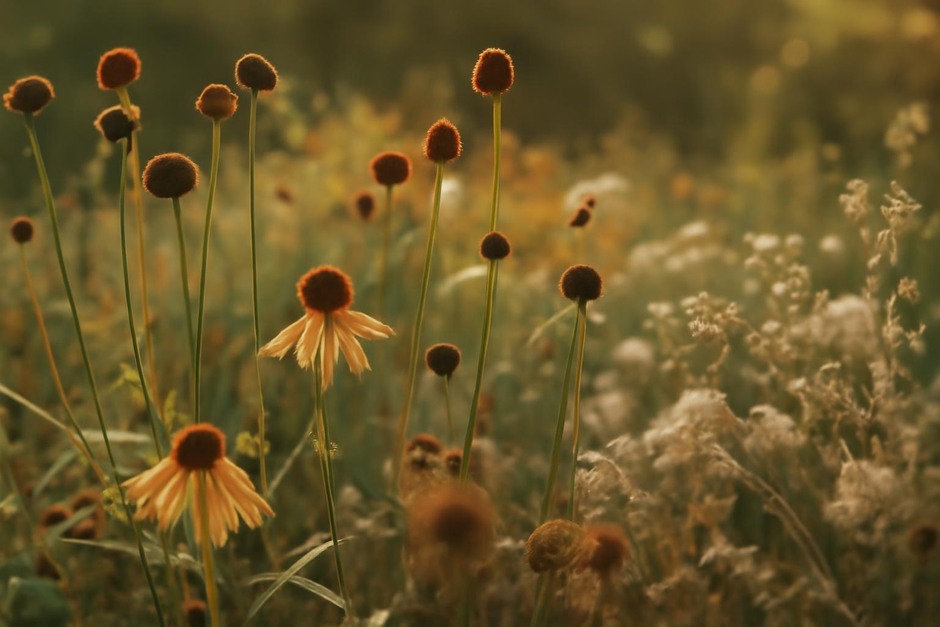
Problem noticed: flowers are past their prime and the bed looks tired. What to look for: the shapes and textures of seedheads—rounded asters, papery hydrangea blooms, elongated grass awns.
- Slow down and scan at eye level, then crouch so seedheads silhouette against the sky or a darker background.
- Rotate around a single plant to see how backlight makes hairs or papery bracts glow.
- Bring one stem close and notice scale: how does the seedhead relate to a thumb or the edge of a pot? This grounds the observation and reveals detail.
2. The Fading-Color Map (10 minutes)
Problem noticed: patches of desaturated color make the bed look flat. What to look for: residual color accents and how they link to texture and structure.
- Stand at a fixed point and make a quick mental map of three zones—where color is strongest, where structure dominates, and where both are thin.
- Walk to the strongest color and find the nearest structural counterpoint (a stalk, a leaf with holes, a curled stem).
- Note how the warmth of late-afternoon light intensifies or mutes those relationships; if you have a camera, try a low-angle frame to emphasize texture over hue.
3. The Quiet Pollinator Watch (15 minutes)
Problem noticed: fewer insects than in peak summer. What to look for: late-season visitors and their preferred surfaces—old phlox, spent salvias, or a single bean flower still open.
- Find a small patch and sit or stand quietly for a fixed time. Use your ears as well as your eyes; wings and wing-hum are often easier to detect than tiny movements.
- If a bee or moth approaches, follow its path for a minute. Note which late-season flowers still feed them and which structural features—flat seedheads, sheltered stems—are used for landing or resting.
- These observations can inform small interventions—leave a patch of spent stems for shelter or plan for a late-blooming perennial next year.
Practice Checklist
Keep this checklist on your phone or a small notecard and use it as a five- to fifteen-minute routine.
- Walk into the garden slowly for 60–90 seconds.
- Choose one small area (a square meter or a single pot).
- Find one seedhead, one faded color, and one insect or sound.
- Change your angle: get low, then high, then closer by a few feet.
- Notice one texture you hadn’t seen at first glance.
- Take one photograph or sketch, focusing on structure not color (optional).
- Make one small decision: leave a stem, move a pot, or note a late-bloom to add next season.
- Repeat weekly through early autumn; compare how textures and light evolve.
Late summer in the garden rewards deliberate, small-scale noticing. The season doesn’t require lavish change to be interesting—only a slight shift in attention. Try the practices above, and you may find the quiet weeks between peak bloom and frost becoming some of the most informative and pleasurable days in the garden year.