A Weekly Plant Portrait: A Simple Four-Step Routine to Track One Plant Through the Season
Why a weekly plant portrait?
Noticing change is easier when you make it a habit. A weekly plant portrait is a compact, low-effort practice that helps you see growth, color shifts, flowering and fruiting, and subtle structural changes. Do it by photographing the plant or by drawing and noting measurements — the method matters less than the consistency.
The four-step method (5–15 minutes)
- Choose one plant.
Pick a single specimen you can reach reliably: a potted herb, a perennial at the edge of a bed, or a small sapling. Prefer something that will be present all season rather than an annual you might move or remove.
- Fix your frame.
Decide a single viewpoint and distance you will use every week. For potted plants, place a small marker or mat where you will set the pot. For plants in the ground, stand at a fixed step or use a stake as a reference point. Record the viewpoint: “front, 1.5 meters away, eye level” or “top-down at 30 cm.” Consistent framing makes comparisons clear.
- Capture or record.
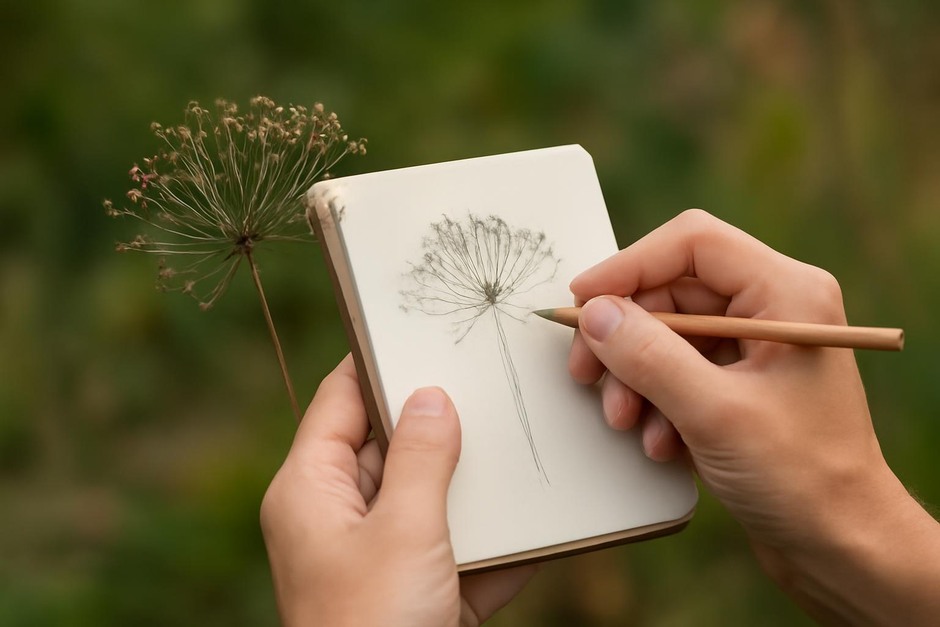
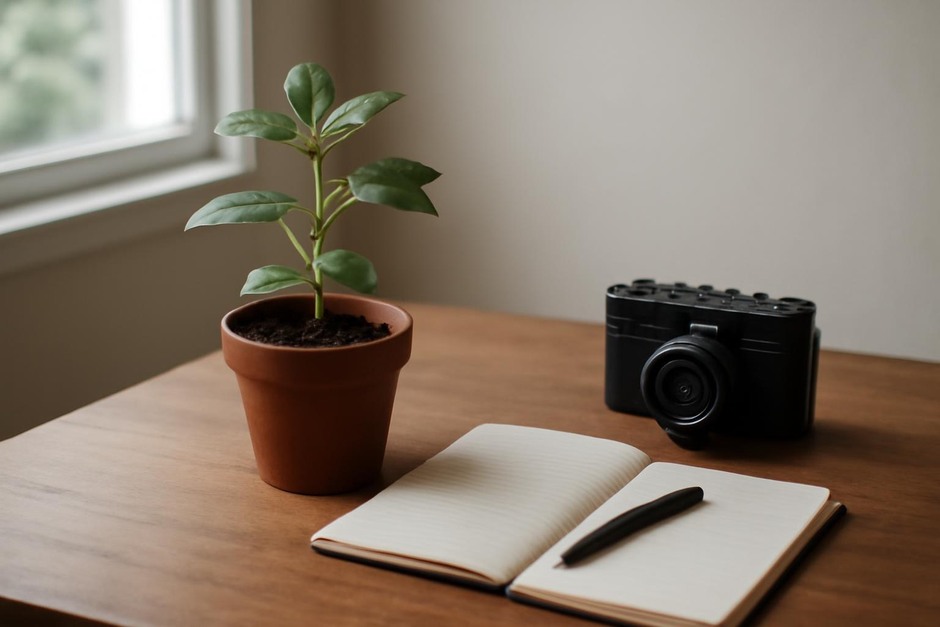
If photographing: use the same camera or phone, lens setting, and basic exposure approach. Turn on a grid if it helps align the frame. If sketching: keep the same paper size and orientation, and take one quick contour sketch, add notes about texture, color, and scent. Either way, note the date and time.
- Add three short notes.
Write a brief line each week, using the prompts: size (height or span), two words for color/texture, and one observation (new leaf, bud, pest sign). Example: “32 cm tall; deep green, glossy; two new buds at top.” These micro-notes make a useful timeline.
Short routine you can repeat
Outline to follow every week: 1) set the plant in its position (if potted), 2) line up your fixed frame, 3) take a photo or 5-minute sketch, 4) add three short notes and the date. Aim for 5–15 minutes total.
When to do it
Pick a day of the week and a rough time. Morning light is often softer and consistent, but the key is regularity. If you miss a week, do the next one — the record is forgiving.
Simple variations
- Photographer’s variation: Add one controlled exposure adjustment. Use the same exposure compensation or aperture each week. If you want more detail, include a close-up of a bud or leaf as a second frame.
- Sketcher’s variation: Add a small color swatch and a scale line. Use a single pen and one watercolor or pencil for color so the record remains unified over time.
- Measurement-focused: Measure height and the span of the main branch or leaf rosette. Log measurements to the nearest centimeter or use a small ruler in the frame for photos.
- Phenology check: Record first open flower, first fruit, color change, or leaf drop as a one-line event in a separate phenology list to complement your portraits.
- Group study: Track three plants with the same routine and compare weekly side-by-side — useful for varieties, soil differences, or microclimates.
Troubleshooting and common hiccups
- Inconsistent light: If sunlight varies, use an overcast routine: photograph in shade or under a translucent cover for even light, or always choose the same hour (e.g., 9–10 a.m.). For sketches, note the light and rely on color notes rather than exact hue matching.
- Plant moves or is repotted: If you must move the plant, record the change and mark the new frame position. Continue the series; a relocation note is part of the plant’s story.
- Camera focus or exposure problems: Use a simple phone tip: tap to focus on the main stem or leaf, then lock exposure if your phone allows. Keep a small reflector (white card) handy to bounce light into shadows if needed.
- Sketch smudging or fading: Use a fixative spray sparingly for pencil sketches, or work with pen over pencil and add a small envelope to store originals flat in a notebook.
- Too busy to keep up: Reduce frequency: switch to biweekly or monthly, or keep only the photograph and the one-line note — consistency matters more than volume.
Final note
This routine is less about creating polished images and more about orienting your attention. Over weeks and months the small, repeated acts reveal rhythms that are easy to miss in daily life: the way leaves unfurl, the timing of blooms, how light changes. Keep it simple, make it regular, and let the portrait be your quiet record of the season.