Keeping a Garden Notebook: Field Micro-Notes vs Seasonal Essays
The question
How should you record a garden so it actually helps you notice, remember, and learn? Two straightforward answers sit side by side: short field micro-notes taken while you move through the garden, and longer seasonal essays written at pause points. I tried both for a gardening year to see what each teaches and how they fit into ordinary life.
Approach A: Field micro-notes (the moving notebook)
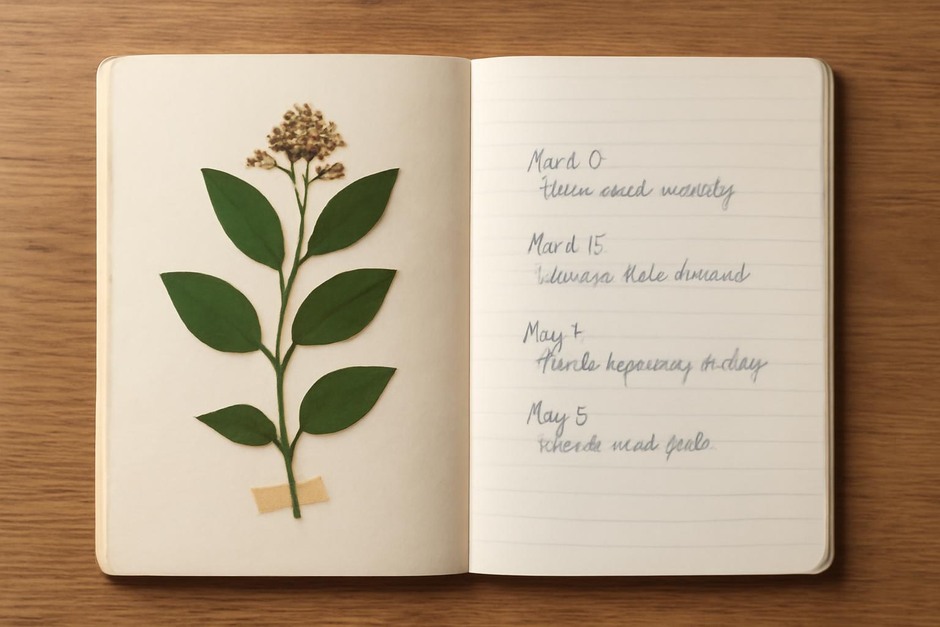
Process: Carry a small notebook or index cards on your way into the garden. Jot one or two observations at each stop—color shifts, insect activity, which bed needs water, a seedpod beginning to open. Notes are crisp, often a phrase or quick sketch, written on the spot. Sessions last 5–15 minutes and can happen daily or a few times a week.
Tools and prompts
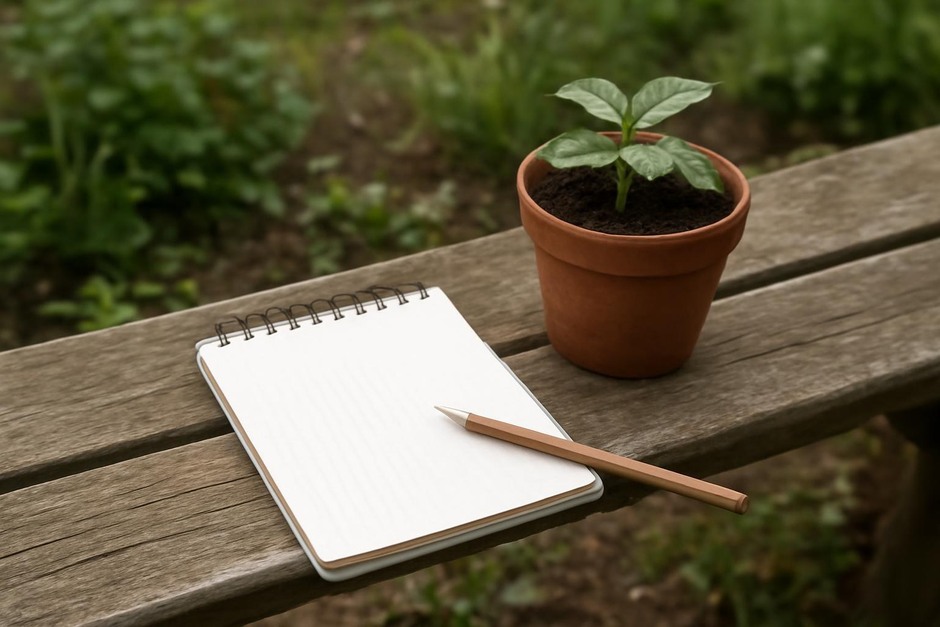
- Pocket notebook (3.5 x 5 in) or stack of index cards
- Fine pen and a pencil for quick sketches
- Prompts: “What is new?” “What surprised me?” “One thing to do next visit.”
What it trains
- Habit: frequent, low-friction attention to the garden
- Detail: fast recognition of change and immediate conditions
- Practical memory: actions you can take that day or week
Typical outcome
A compact archive of incremental changes: plant-specific one-liners, short sketches of pests or bloom stages, and an accumulated to-do list. Over months these notes form a granular timeline you can scan quickly.
Approach B: Seasonal essays (the reflective pause)
Process: Set aside a block of time at the end of a season or at a meaningful transition—six-week intervals or the first frost—to sit with the garden and write a longer piece. Gather a few photos or pressed specimens beforehand. The essay runs 400–1,200 words, weaves observation with interpretation, and names patterns across the season.
Tools and prompts
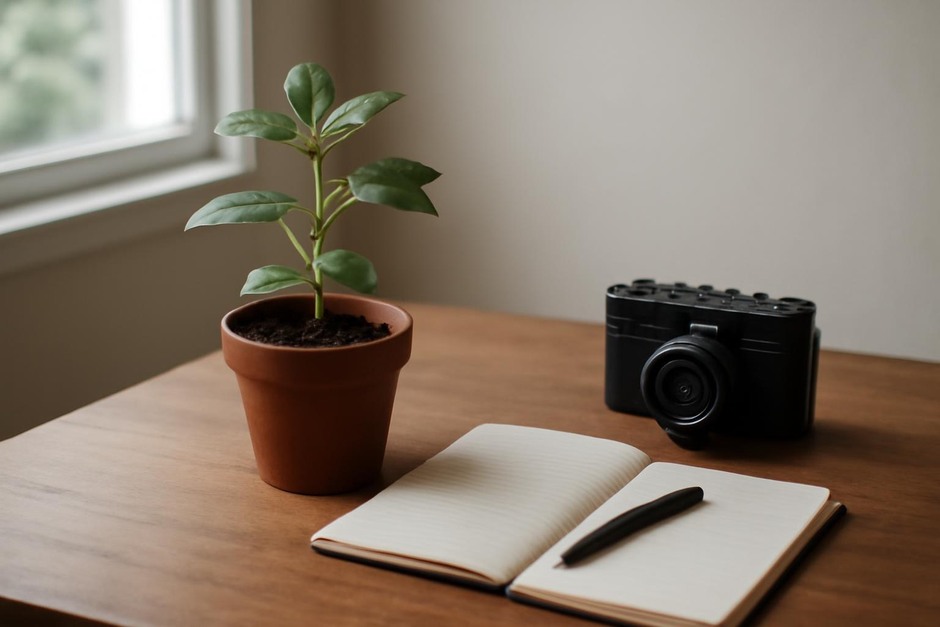
- Larger notebook or laptop for longer text, plus a camera
- Prompts: “What repeated theme emerged?” “What failed and why?” “What will I try differently?”
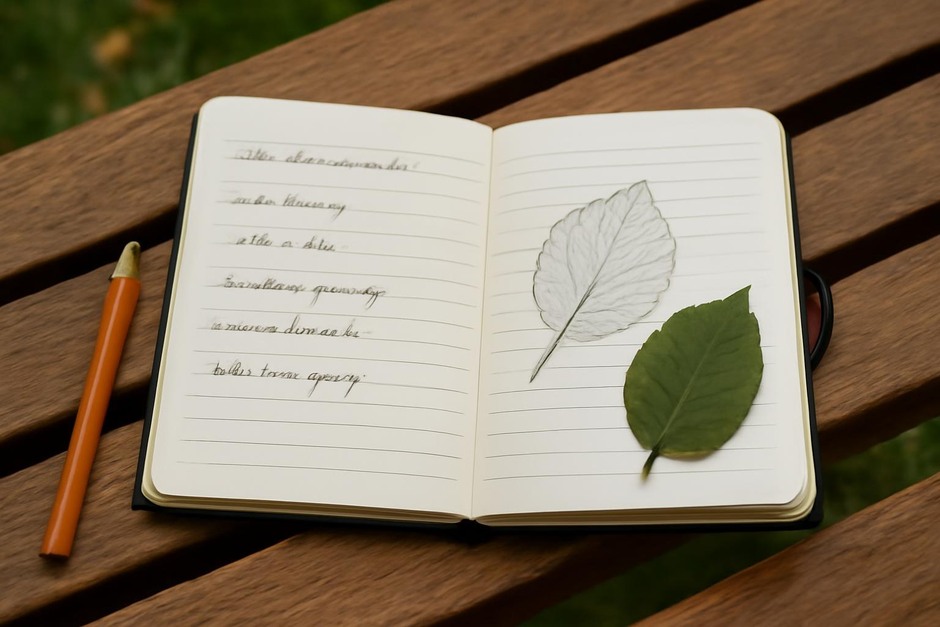
- Gather a few representative photos or a pressed leaf for reference
What it trains
- Big-picture thinking: pattern recognition and cause-and-effect
- Narrative: connecting discrete events into a seasonal story
- Reflection: making plans informed by context, not urgency
Typical outcome
A readable, deliberative record that captures lessons and intentions—useful when planning next season or explaining the garden’s arc to someone else.
Comparing strengths and trade-offs
- Time: Micro-notes require small, frequent investments; essays require larger, occasional blocks.
- Depth vs breadth: Micro-notes favor detail and immediacy; essays favor synthesis and meaning.
- Motivation: Micro-notes build a daily habit; essays reward patience with perspective.
- Usability: Micro-notes are quick references for tasks; essays guide future decisions and experiments.
How to choose (or combine) based on what matters to you
Ask three quick questions:
- Do you want more frequent noticing or clearer long-term lessons? If you want to notice change as it happens, favor micro-notes.
- How much uninterrupted time can you realistically free? If large blocks are rare, a micro-note practice will stick; if you enjoy slow afternoons, seasonal essays will feel rewarding.
- What outcome pleases you most—an actionable to-do list, or a reflective narrative that shapes next year? Choose accordingly.
Most gardeners benefit from a hybrid: use micro-notes through the active season to collect raw material, then synthesize those notes into a seasonal essay. The micro-notes supply details and reminders; the essay converts fragments into insight.
A simple hybrid routine to try for one year
- Carry a pocket notebook for weekly micro-notes from March through October—aim for two to three short entries per week.
- At the equinoxes and first frost, block 90 minutes for a seasonal essay. Review your micro-notes first, then write an essay answering the prompts above.
- Archive micro-notes in a folder or digital scan so you can reference them when writing the essay.
Review
Field micro-notes sharpen the habit of noticing; seasonal essays turn noticing into learning. Pick the approach that fits your life right now, or combine them: steady fragments that, over time, make a clearer map of the garden’s seasons and your own practice of paying attention.