Composing Depth: Six Simple Field Exercises to See Layers in a Scene
Depth in photographs feels less like a technical setting and more like a practiced way of seeing. These six small experiments are built to be done on a walk, in a yard, or on a street corner. Each one is short, observational, and cumulative: repeat them and you’ll find the skill grows steadily.
How to use these exercises
Do them in sequence when you can, or pick one to repeat for a week. Carry whatever camera is handy — phone, rangefinder, mirrorless. The point is not gear but attention: notice how small compositional choices change the perception of space.
1. The Foreground Anchor (5–10 minutes)
Purpose: learn to include a near object that gives scale and depth.
- Find a scene with distance — a garden bed looking toward a fence, a street looking to a building, a bench with trees beyond.
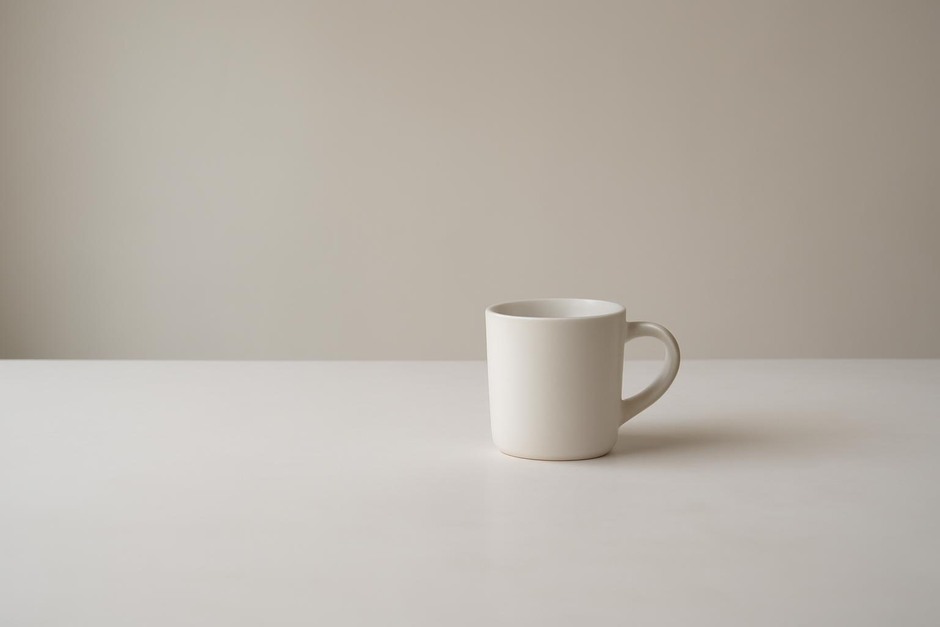
- Place a small object in the frame’s closest corner: a leaf, a cup, a stone, or use a hand or finger. Make sure it’s clearly visible but not dominant.
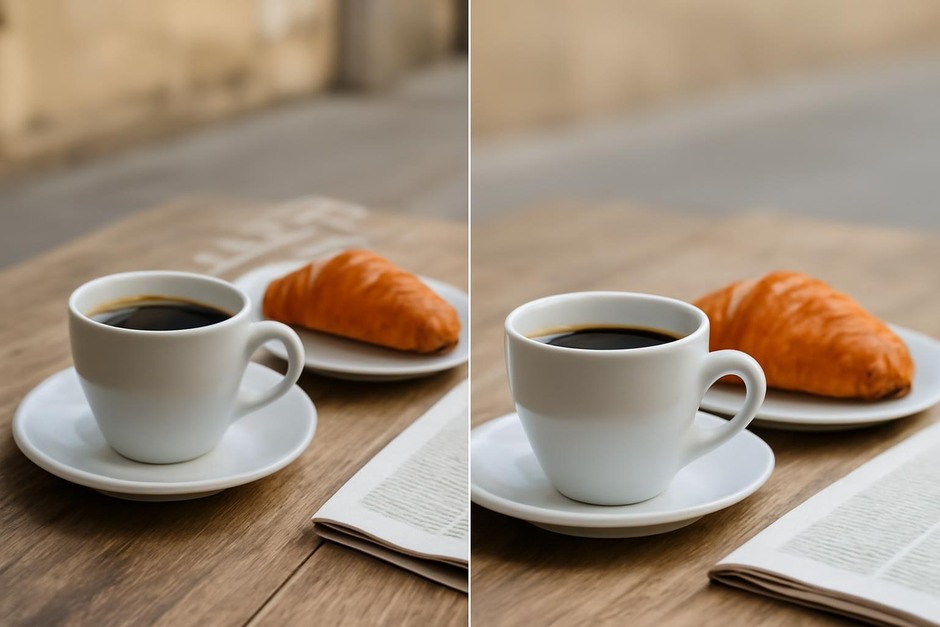
- Shoot two versions: one with the anchor, one without. Compare how the anchor changes the feeling of space.
Observation: The near object gives the eye a starting point. Note how scale and intimacy change when an anchor is present.
2. Overlap and Scale (10–15 minutes)
Purpose: train recognition of overlapping shapes to convey relationships of distance.
- Find three subjects at different distances (near, mid, far). Look for partial overlaps: a branch partly covering a path, a person in front of a building, a lamp in front of a hedge.
- Move so those overlaps become more or less pronounced. Take a sequence of shots as you adjust.
- Note how a slight overlap can make two distant elements read as separate planes, while clear overlap reinforces depth.
3. Leading Lines and Diagonals (10 minutes)
Purpose: see how lines guide the eye through layers.
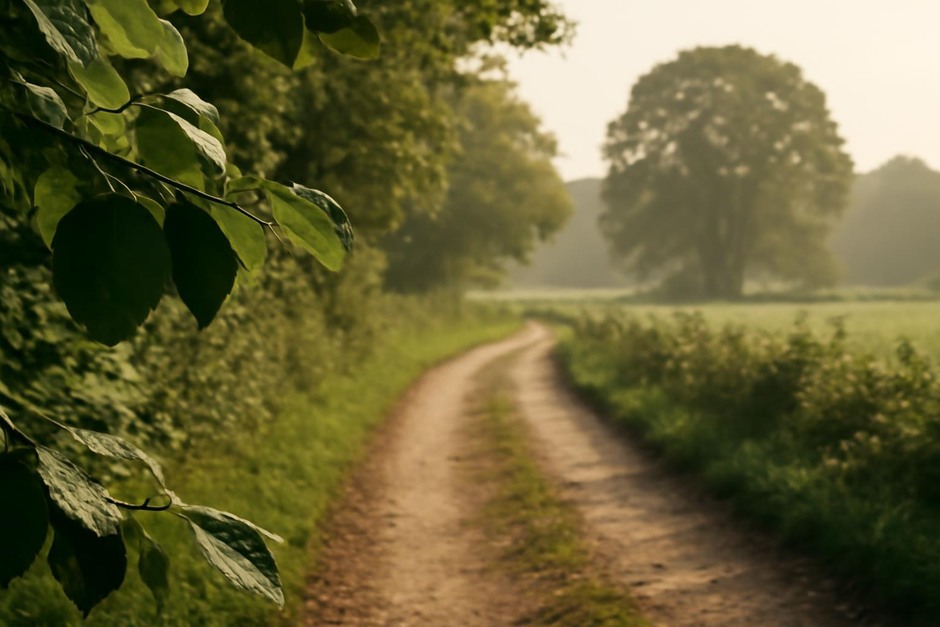
- Locate converging lines: a fence, a gutter, a row of trees, a path. Compose so the lines begin near the camera and continue into the distance.
- Try shifting the start point of the line in the frame (left, center, right). Observe where the eye travels and which elements become part of foreground, midground, and background.
- Experiment with diagonal lines versus horizontal bands. Diagonals often emphasize depth more strongly.
4. Tonal Layers and Haze (10 minutes)
Purpose: use tone and atmospheric cueing to separate planes when physical overlap is limited.
- Shoot a scene with a clear gradation of tone from front to back — shadowed foreground, midtone middle ground, paler background (or the reverse at sunset).
- Make two photos: one exposed for the foreground, one for the background. Compare how exposure shifts alter perceived distance.
- Note atmospheric effects: even slight haze or desaturation of distant elements can create convincing depth.
5. Focus and Aperture Walk (15 minutes)
Purpose: understand how depth of field affects perceived space.
- Choose a three-layer scene (near plant, middle subject, distant horizon). Take a shot at wide aperture (low f-number) with focus on the middle plane.
- Take the same composition with a narrow aperture (high f-number) so all planes are sharp. Also try focusing on the foreground and on the background while keeping aperture constant.
- Compare how selective focus simplifies space and how deep focus emphasizes layered relationships.
6. Layer Sequence: Make a Depth Series (20–30 minutes)
Purpose: practice intentional sequencing to assemble a sense of depth through multiple frames.
- Stand in one spot. Take a close-up of the nearest element, a mid-distance frame, and a distant frame — three separate but related images.
- Now compose a single frame that includes elements from each of those three shots. Try to keep the visual weight balanced so each layer contributes.
- Repeat with different scenes: urban streets, fields, a living room. The exercise trains you to notice which elements can become layers and how to combine them.
Closing note
These exercises are small by design. The skill of composing depth is less about startling effects and more about habitual, careful choices: where to place your eye, which element to include or exclude, and how light and focus organize planes. Repeat any exercise when you have five to twenty minutes. Over weeks, the way you see — and the photos you make — will begin to carry more convincing space.
Bring curiosity. Make one change at a time. Notice what the image asks for, and try to answer it with placement more than trickery.